January website inquiries ran about 25% above early December in 2024–25, with demand remaining elevated through mid-February. As senior living operators prepare for the 2026 holiday season, the opportunity is to get ahead of that increase by preparing sales teams, coordinating follow-up, and ensuring families receive timely, thoughtful support throughout their decision-making journey.
Consider a family that says they’ll revisit senior living after the holidays. Your sales director makes a note to follow up in January. Then January arrives, new inquiries pick up, and that conversation joins a growing list of people to call back.
This is the part of the winter surge that deserves more attention: what happens between a family’s first question and the moment they’re ready to take another step.
Last year, Further’s article, “The Winter Surge Is Real. Are Your Communities Ready?” explored the seasonal increase in demand and the importance of preparing early. Heading into the 2026 holidays, a closer look at two seasons of website inquiry data reinforces that message and offers a useful benchmark for planning.
Further’s comparison shows January website inquiries running about 25% above early December in 2024–25, compared with approximately 28% in 2023–24. During the 2024–25 season, inquiry levels remained elevated through mid-February, broadly holding at January levels.
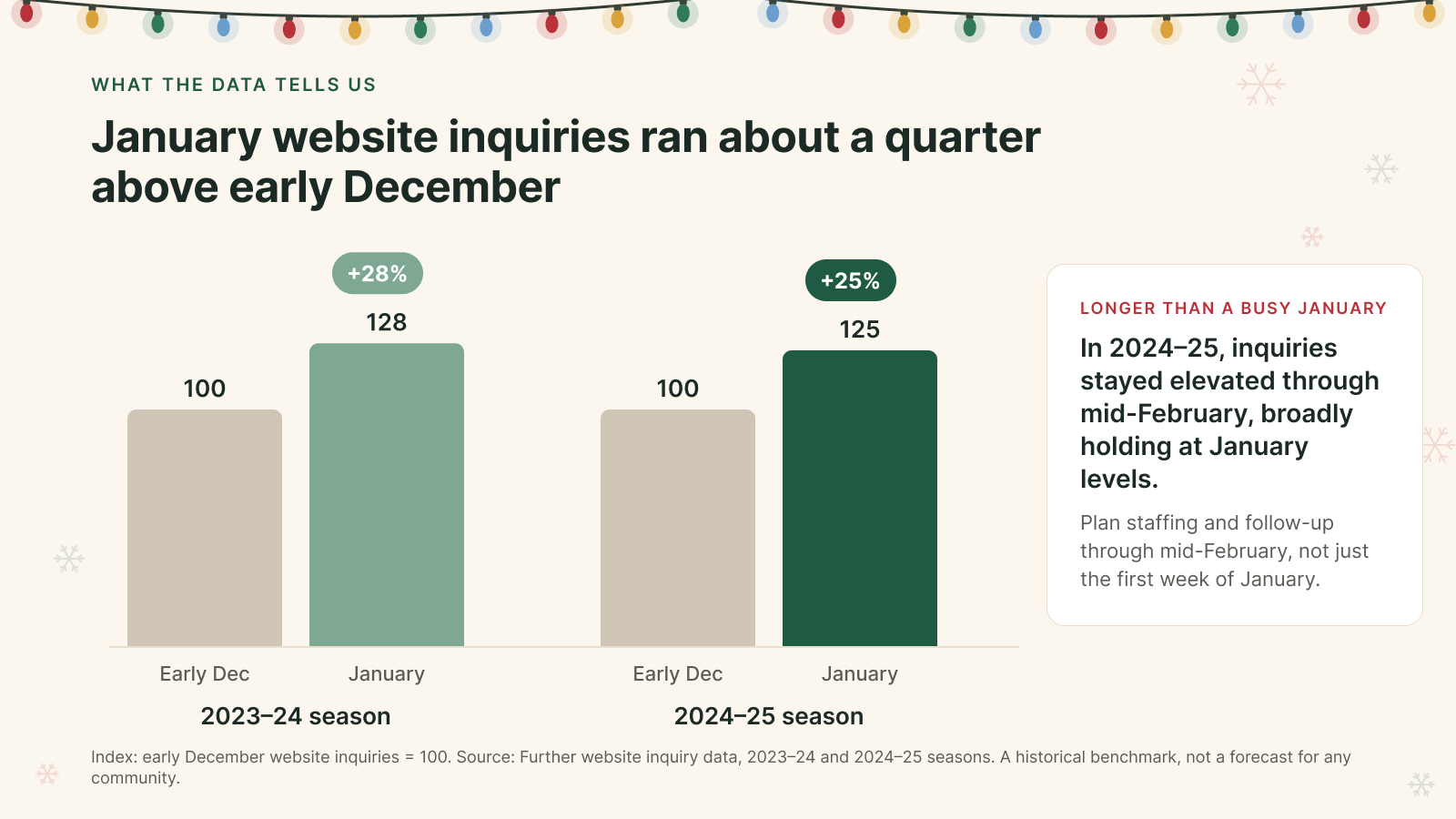
That gives operators a useful planning reference: roughly a quarter more website inquiries than early December, with elevated demand extending beyond the first weeks of the new year. This is a historical pattern, not a prediction that every community will experience the same increase this winter.
The practical implication is straightforward: prepare for a longer period of elevated demand, not just a busy January. That preparation starts before the holidays, continues while families are navigating the season, and carries into the new year.
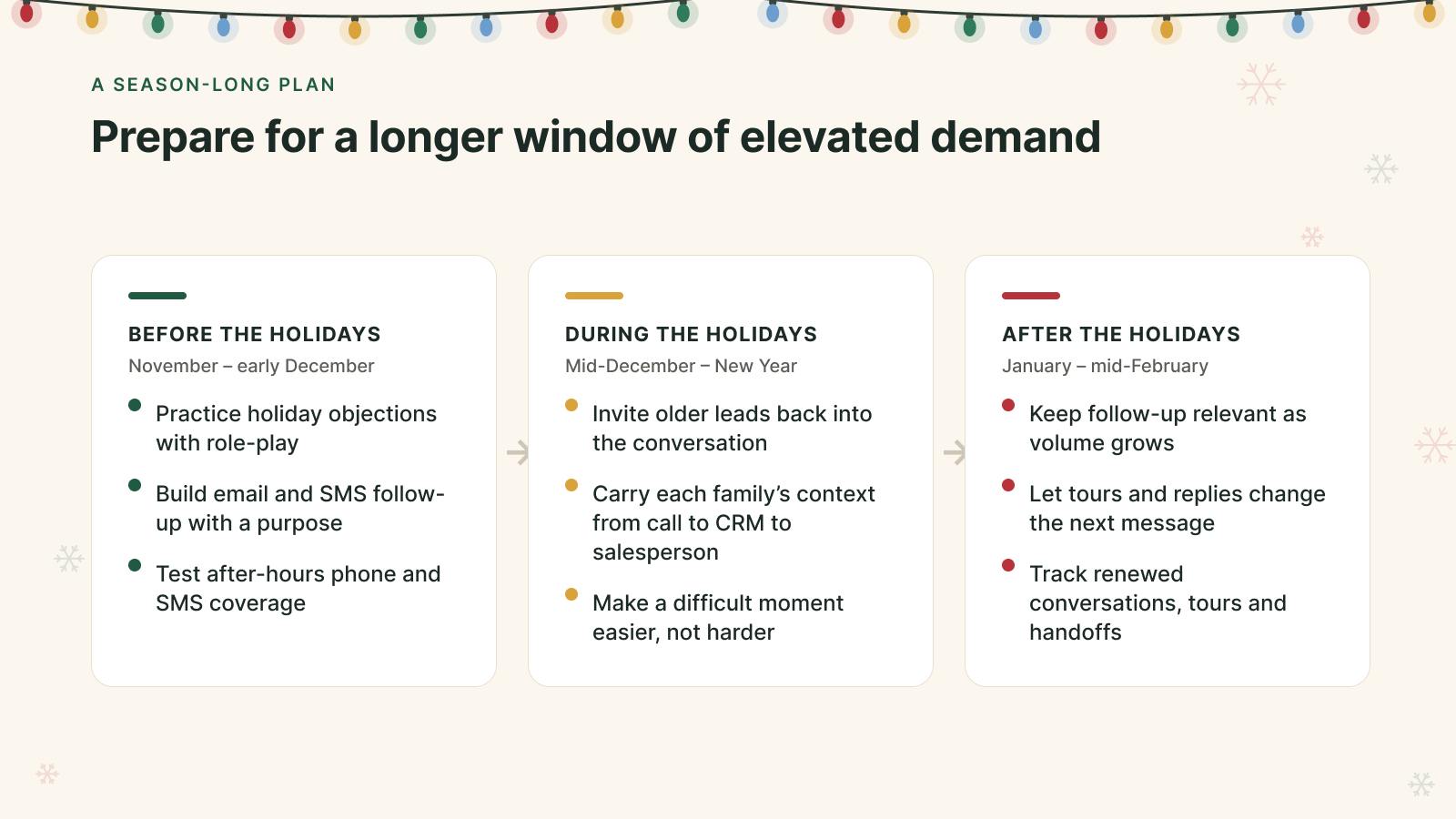
The best time to prepare for the winter surge is before the calendar fills up. By practicing difficult conversations, getting families to visit before the spike, building purposeful follow-up campaigns, and testing coverage plans, your team can enter the holiday season ready to support families.
“We want Mom to have one more Christmas at home.” “We’ll talk about it when everyone is together.” “Let’s wait.”
These objections deserve curiosity, not pressure. A family may be protecting a tradition, trying to include siblings, or simply feeling overwhelmed. A prepared salesperson can explore what is behind the hesitation and offer a next step that respects the family’s concerns. December is a great time to visit and get a real feel for the community, all decorated for the season.
Before the holidays, have your team practice these scenarios. Further’s AI Training & Coaching provides an opportunity to rehearse holiday conversations and receive feedback before speaking with families.
A useful practice prompt is: “We don’t want to make a decision until after the holidays.” Ask the salesperson to acknowledge the concern, explore what the family still needs to understand, and agree on a helpful next step. That might be a visit during a holiday event, a short call with another family member, or a specific date to reconnect.

The measure of a good response is whether the family feels heard and knows what happens next.
If a family is still exploring, every message should make that exploration easier. A generic holiday greeting may be warm, but it gives the family little reason to continue the conversation.
Build email and SMS follow-up around the questions families may be working through: What support would make daily life easier? What should we look for during a visit? How can we include our parent’s preferences in the discussion?
Match the message to the recipient. An adult child researching options for a parent needs different language from someone exploring a community for themselves. Offer one clear next step, whether that is asking a question, arranging a call, or scheduling a visit.
Use automation to keep touchpoints consistent, with a person ready to respond when the conversation becomes more specific. When someone replies or books a tour, adjust the sequence so the next message reflects what has already happened.
Holiday coverage needs to account for PTO, weekends, and the time sales directors spend with families already in the community. An inquiry can arrive during any of those gaps, and a delayed response can make it harder to maintain momentum.
Further’s AI Inbound Agent can provide 24/7 phone coverage as well as SMS coverage, helping communities respond when staff are unavailable. Its value depends on the preparation around it: accurate community information, clear routing, and a reliable handoff to the team.
Test that experience before the holiday schedule begins. Call after hours. Ask a common question. Check where the inquiry lands and who owns the follow-up. Confirm that a family requesting a person has a clear path to one.
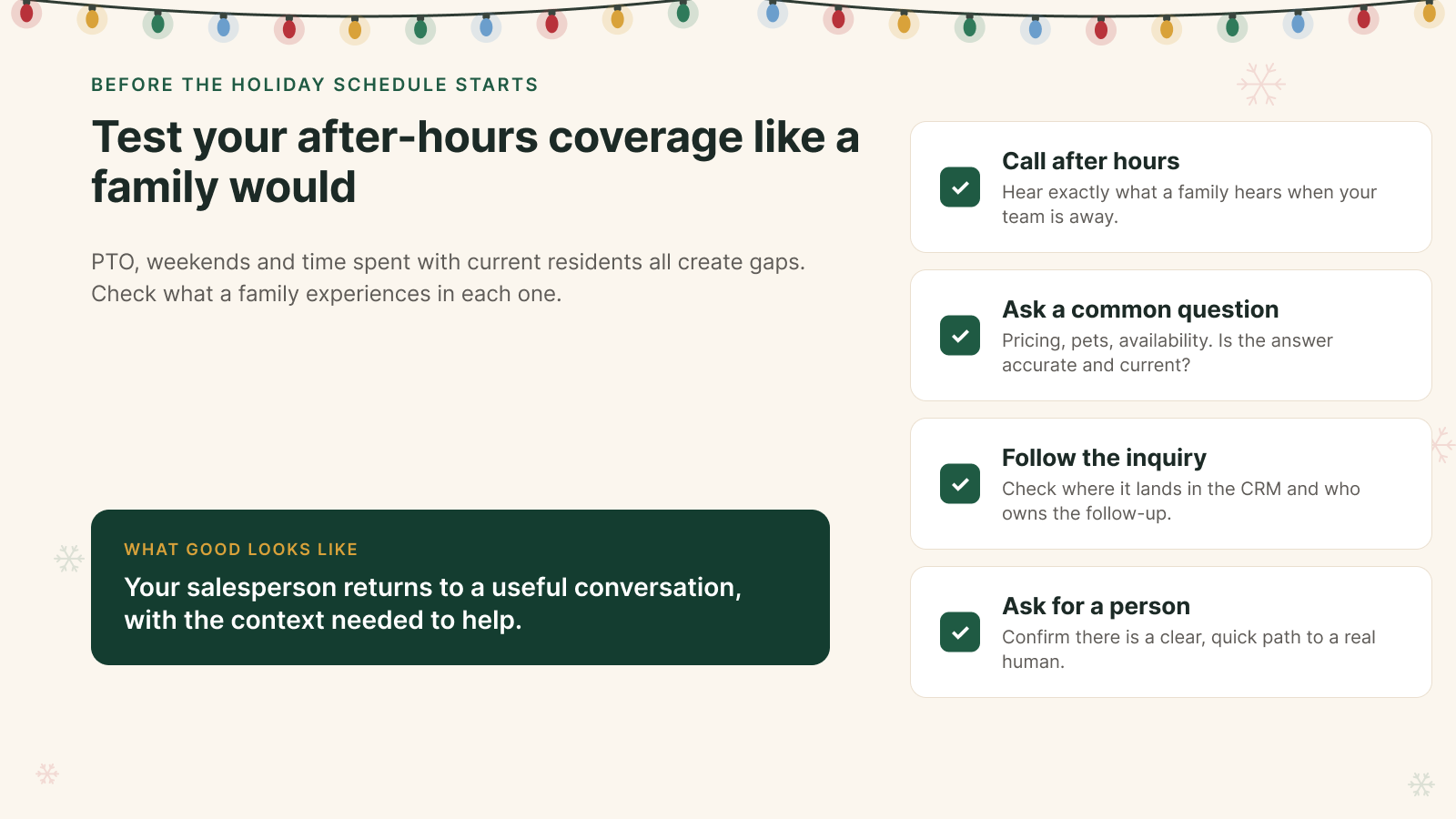
Coverage works when your salesperson can return to a useful conversation with the information needed to help.
Once the holiday season begins, families may be balancing travel, gatherings, changing routines, and difficult conversations about a loved one’s future. Your outreach should recognize those realities while keeping the door open for families who are ready to learn more.
The holiday opportunity includes people already in your database, not just new inquiries. A family that paused its search months ago may have new questions after spending time together or noticing changes in a loved one’s day-to-day needs.
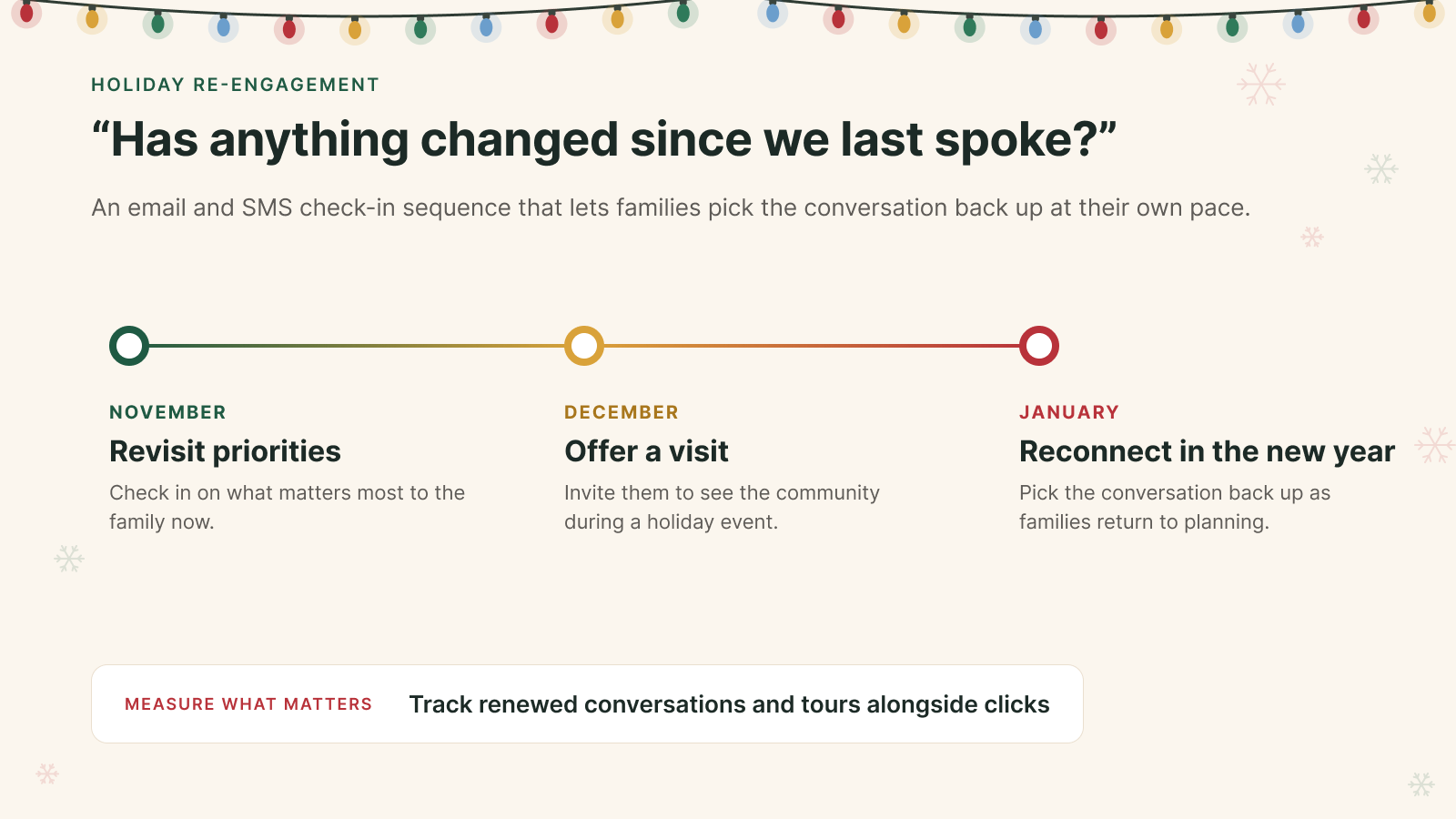
Your re-engagement campaign can open with a simple invitation: “Has anything changed since we last spoke?”
Create a holiday cold-lead campaign that combines email and SMS check-ins from November into January. The sequence can move from revisiting priorities to offering a visit and reconnecting in the new year, giving families room to continue at their own pace.
Before launching, review who belongs in the audience. Use what you know about each family’s previous interest, and make sure replies reach someone who can pick up the conversation with context.
Track renewed conversations and tours alongside clicks. Lead engagement becomes useful when it helps your team understand who is ready for attention now.
A holiday visit can bring a difficult realization: a parent may need more support than the family understands. An adult child may leave worried about safety, unsure how to raise the subject, and feeling guilty about what a move could mean. Their parents may have concerns of their own about independence, familiar routines, and leaving home.
By the time a family reaches out, they may already be carrying considerable emotional stress. Having to repeat their story, chase an answer, or receive a generic message after sharing a personal concern only adds to that burden.
Look at your tools and sales process through the family’s eyes. Does the conversation carry from an after-hours call into the CRM and on to the salesperson? Does the next email reflect what the family has already shared? Does a request for help reach someone who understands the context?
AI coverage, automation, and your sales team should work together to provide a consistent, thoughtful experience. Each interaction should help the family feel heard, understand their options, and take the next step at a pace that respects both the prospective resident and their loved ones.
January is not the finish line for holiday outreach. It is when many conversations that paused in November and December may begin moving forward again, just as new inquiries increase.
With demand historically remaining elevated into mid-February, teams need a plan to reconnect with families, respond to renewed interest, and maintain continuity across every interaction.
As January inquiries pick up, consistency becomes just as important as speed. Review your follow-up processes to make sure new leads receive timely responses while existing prospects continue to receive relevant communication.
Use automation to maintain a steady cadence, but ensure that meaningful interactions change what happens next. A booked tour, a request for more information, or a conversation about a parent’s needs should inform the next communication rather than trigger another generic message.
Keep an eye on renewed conversations, scheduled tours, and completed handoffs alongside inquiry volume and engagement metrics. These indicators help your team understand whether follow-up is moving families toward a meaningful next step.
The goal is not simply to manage more leads. It is to help each family move forward without losing the context and trust built during earlier conversations.
The winter surge is more than an increase in inquiries. It is an opportunity to reconnect with families at a time when the need for support may become clearer, while ensuring that every conversation receives the attention it deserves.
Preparing before the holidays, staying connected during the season, and following through in the new year can help your team make the most of that opportunity.
As you prepare for the holiday season, ask one question: Are your tools and sales processes aligned to make this difficult decision easier for the people going through it?
Connect with Further to explore how holiday role practice, coordinated email and SMS follow-up, and 24/7 AI inbound coverage can support your team in delivering a consistent, thoughtful experience throughout the winter surge.