Senior living applicants apply to several communities at once. The one that calls back first usually gets the hire. Here's why speed to candidate matters as much as speed to lead, and how AI is closing the gap.
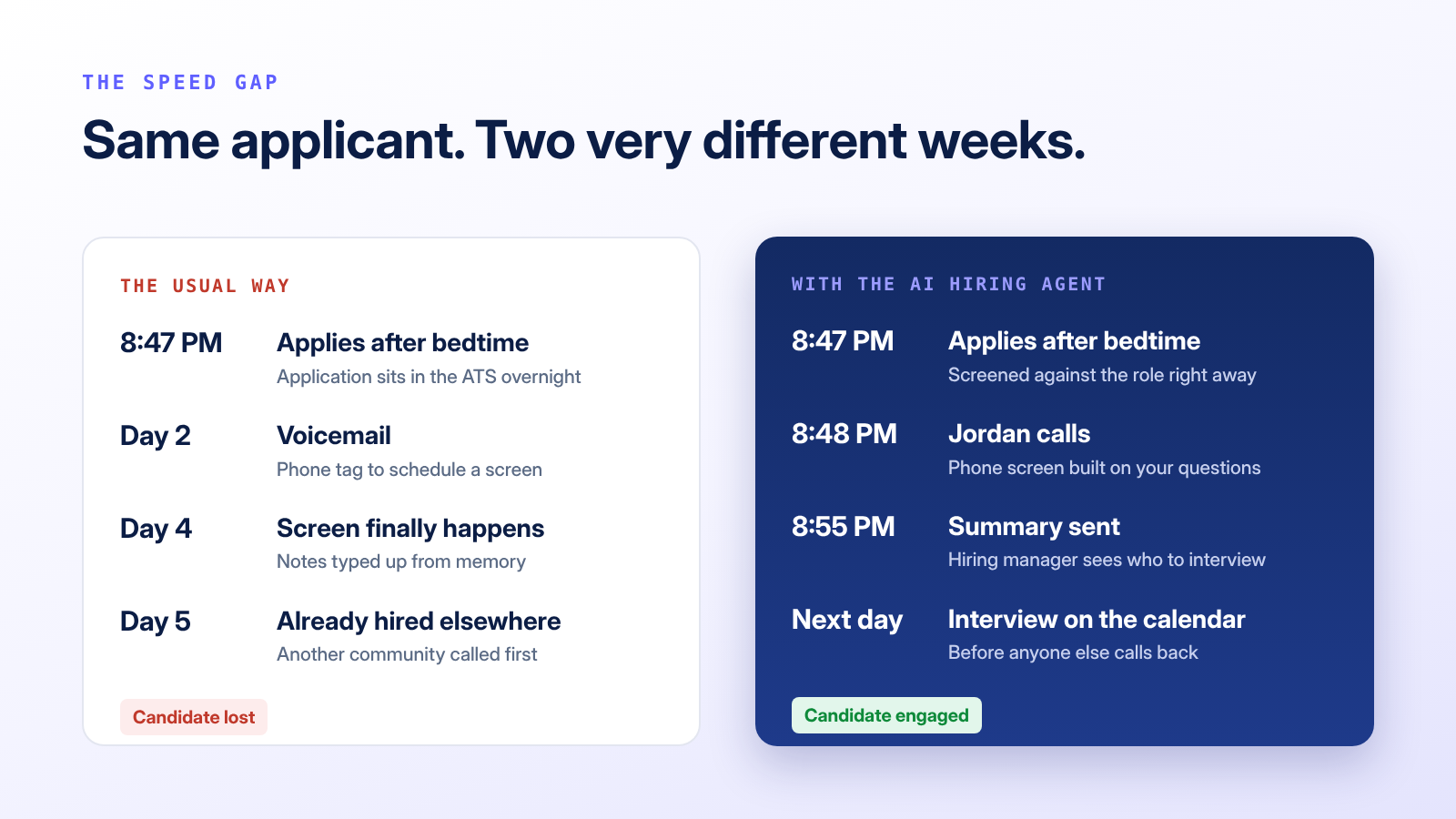
It's 8:47 on a Thursday night. A cook finishes putting her kids to bed, opens her phone and applies to your community. She also applies to four others.
Your hiring manager sees the application the next morning, or the morning after, depending on the week. Calls go back and forth to set up a screen. By the time someone reaches her, she's already interviewing down the street.
Senior living sales teams know this story by heart, because it's the same one they've spent years fixing on the lead side. Speed to lead became a discipline because the community that responds first usually wins the tour. Hiring works the same way. Most communities just haven't applied that discipline to applicants yet.
Every open role starts a chain reaction that eventually reaches your occupancy numbers:
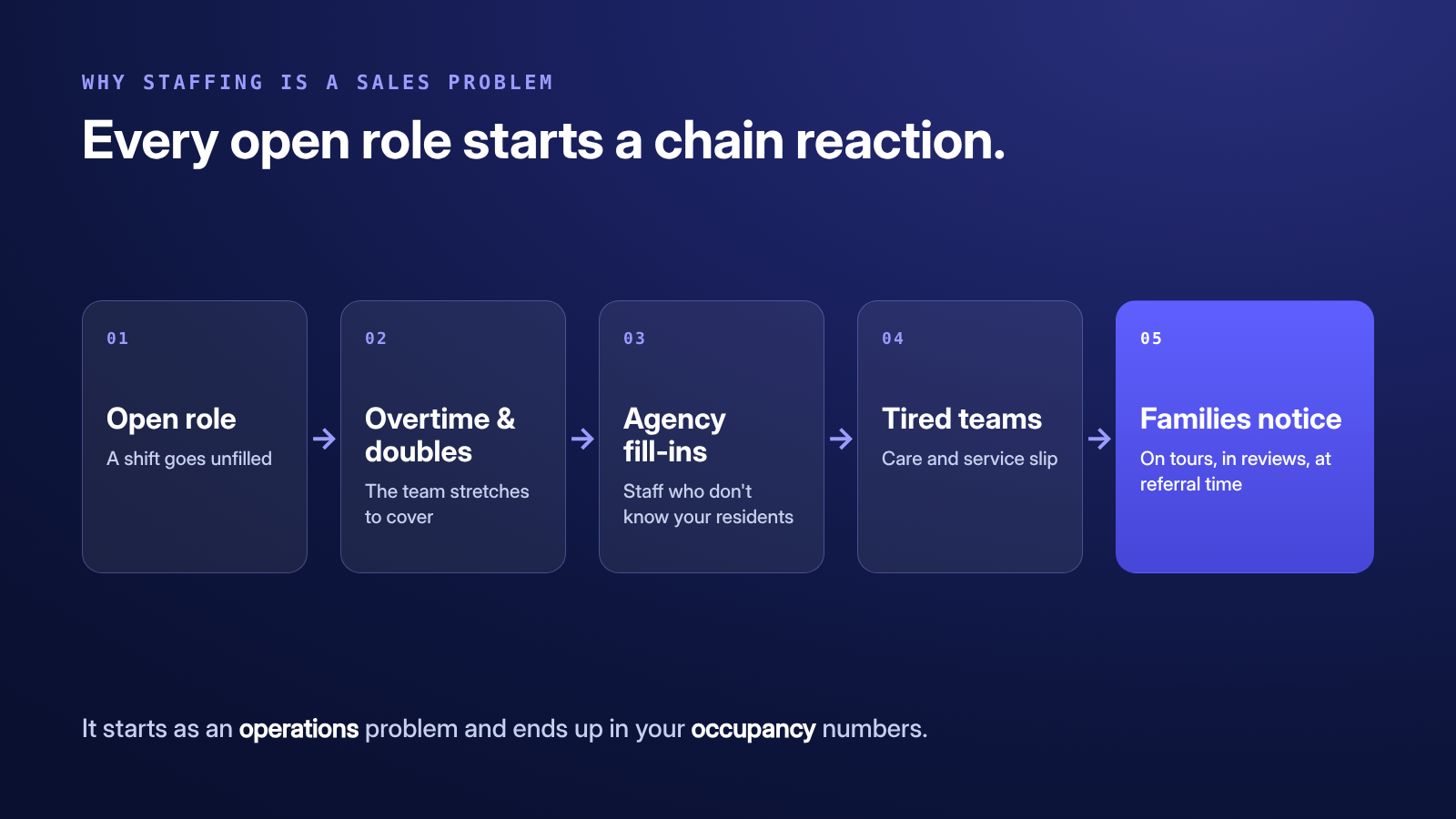
That's why sales and operations leaders keep landing in the same conversation. You can't run a great tour in a community that's short-staffed, and you can't keep a building full if the people caring for residents keep changing.
For most communities, the slowest part of hiring isn't the interview or the offer. It's the first step:
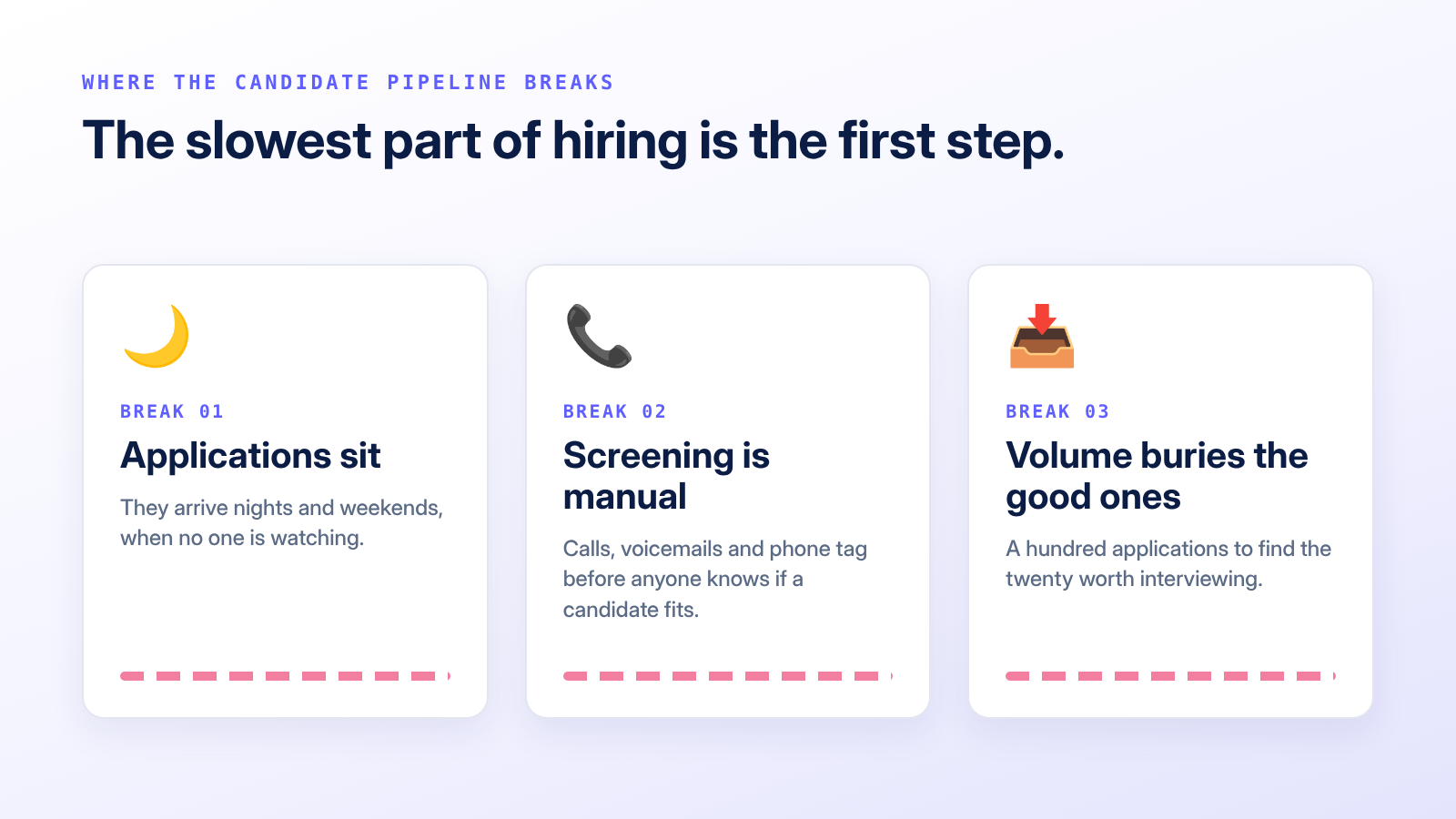
Every day lost in that stretch is a day another community can call first.
Further customers already have tools for this, and a new one is on the way:
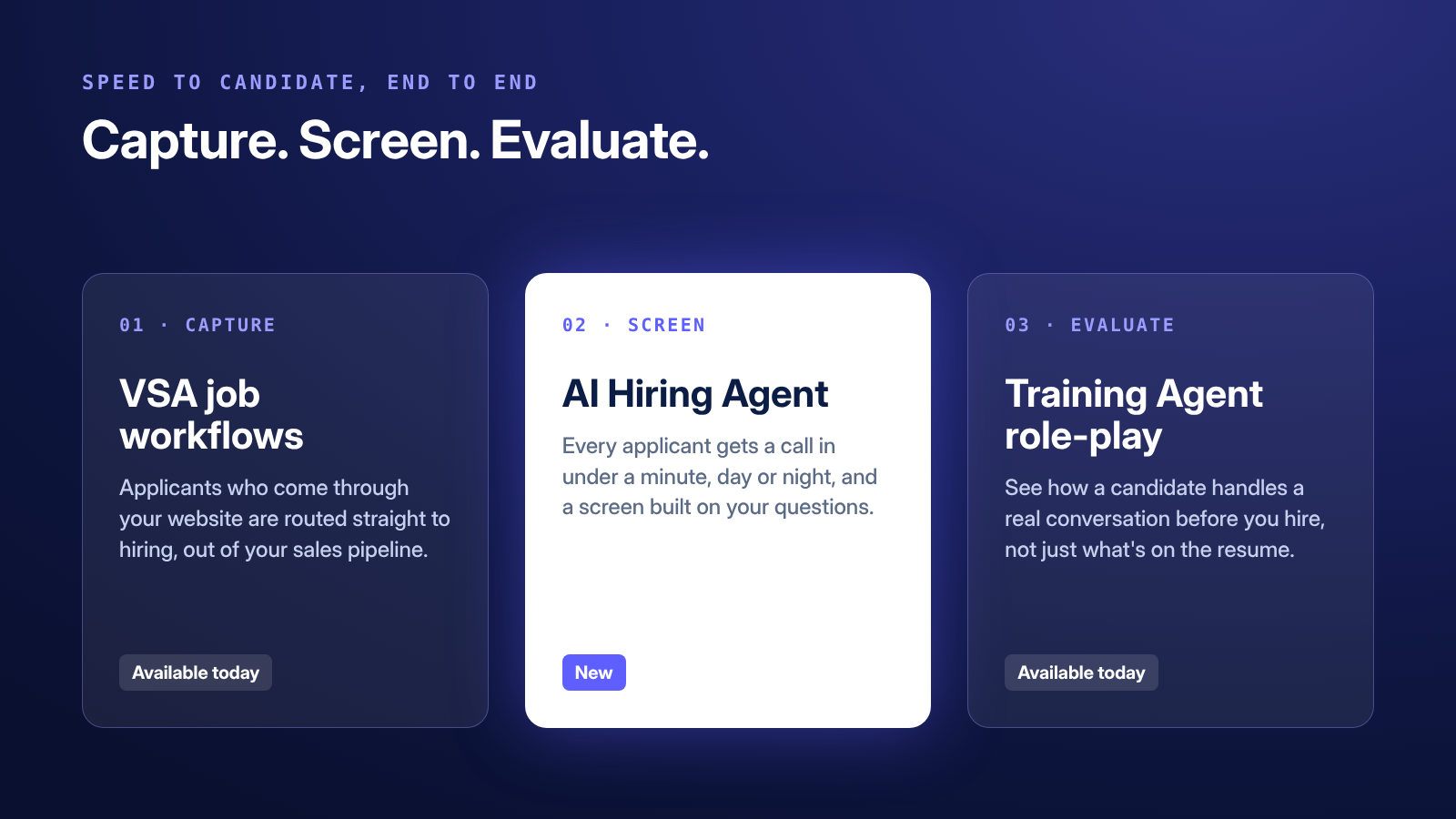
The result: the 8:47 PM applicant gets a call at 8:48 PM, not next week.
Join Aaron Kaffen, VP of Marketing, and Andrea Hunter, VP of Product Strategy, for Hire Faster: How Senior Living is Fixing the Candidate Pipeline with AI, a practical look at:
Thursday, November 5 · 2:00 PM ET · Virtual
Save your spot →
Can't make it live? Register anyway and we'll send you the recording. Leading operations or HR? This one's for you too, because staffing shows up in everyone's numbers.