In most senior living organizations today, sales performance is still measured with manual call sampling, spreadsheets, and subjective feedback that doesn’t scale across regions. It’s hard to see how well teams are really handling conversations, and even harder to know where to focus coaching for the biggest impact on tours and move-ins.
Further’s new AI-driven call scoring evaluation system is designed to change that.
It introduces a unified, agentic way to evaluate both role-play and real calls, built specifically for senior living sales. The goal is simple: give sales leaders a clear, trusted view of performance and a tighter link between coaching, training, and move-in outcomes.
.gif)
The new AI-driven call scoring evaluation was developed with senior living industry experts with decades of experience and refined using millions of real senior living sales calls. It evaluates 40+ areas across the entire sales conversation, from emotional connection and discovery, to value discussion, objection handling, and guiding the next step or tour.
The result is a more complete and realistic view of sales performance—recognizing strong conversations that move the relationship forward, even when they don’t follow a rigid script.
For sales leaders, this means you get a more complete, realistic picture of how reps are actually performing on the phone, not just whether they hit one expected milestone.

Not every family call looks the same. A rushed inquiry, an early discovery conversation, or a call that converts to an event instead of a tour can all be successful sales outcomes.
The new call scoring evaluation is context-aware. For each call, the AI considers factors like:
Based on these signals, it applies the most relevant criteria for that specific call whether it’s a short Q&A with a busy daughter or an in-depth discovery call.
For sales leaders, this scoring is more accurate across different call types from short calls with busy prospects to calls that convert to events or next steps instead of immediate tours.
The same evaluation now powers both the Sales Training Agent, how reps should perform in structured role-play, and our Call Coaching Agent, how reps actually perform on real inbound calls.
This creates a shared performance language across practice and real calls:
For sales leaders, this means you can finally run a closed-loop improvement system from Training → Coaching → targeted Training again, all using the same definition of success.
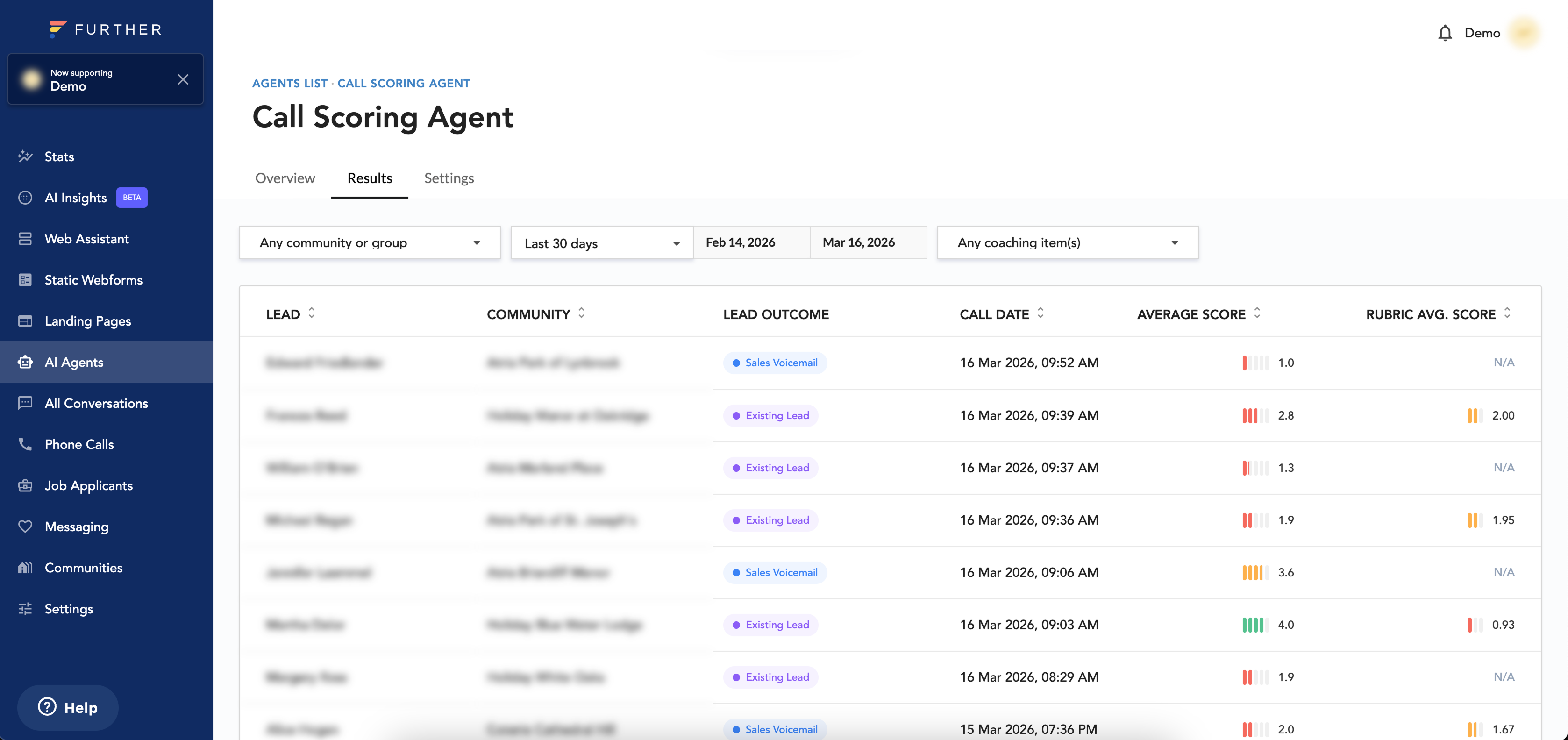
Each evaluation area now comes with:
Instead of generic comments, you get concrete examples of where points were earned, where points were lost, and which specific phrases, questions, or missed opportunities drove the score.
A simpler 0–3 scale underpins this experience, with each level defined by clear, observable performance. This improves scoring consistency and avoids artificial precision between close numeric scores. Multiple evaluation areas then roll up into a more trustworthy assessment of overall call quality.
For sales leaders, this helps make coaching conversations more objective and actionable.
For senior living organizations, this new call scoring evaluation is about more than scoring. It’s about running a stronger sales operation across communities.
1. Faster visibility into where to coach: With an expanded, context-aware evaluation and clear evidence, you can quickly see which communities struggle with discovery, which reps are strong in rapport but weak on next steps, and where calls stall before a tour or move-in, so you can focus coaching time and budget where it will move occupancy the most.
2. A tighter link between training and move-ins: Because the Sales Training and Call Coaching Agents now share the same evaluation, you can align Training scenarios to the skills that drive success on real calls, use Coaching insights to choose what to practice next, and see how improvements in practice start to show up in live conversations and outcomes.
3. A more consistent family experience: By emphasizing behaviors like emotional awareness, discovery, and clear next steps, the evaluation helps raise the baseline quality of every call, deliver a more consistent, supportive experience for families across communities, and keep your brand, messaging, and follow-up aligned across your portfolio.
If you'd like help designing that next training round or interpreting the new call scoring evaluation, reach out to your Further Customer Success Manager—we're here to help you turn this into stronger performance across your communities.