

%20(1).avif)
As the new year begins, Senior Living operators across the country are adjusting rates. Inflation, labor pressures, and rising consumer expectations are impacting every market. Families notice—and Sales teams are often left to justify pricing decisions in real time.
For many teams, higher rates create instant anxiety. When Sales teams lack clarity around how pricing compares, why it’s different, and how to explain that difference, uncertainty erodes confidence and slows momentum.
In this post, we’ll walk through three simple steps to help you validate your competitive landscape, shift conversations from price to value, and confidently practice the talk tracks that win real-world conversations.
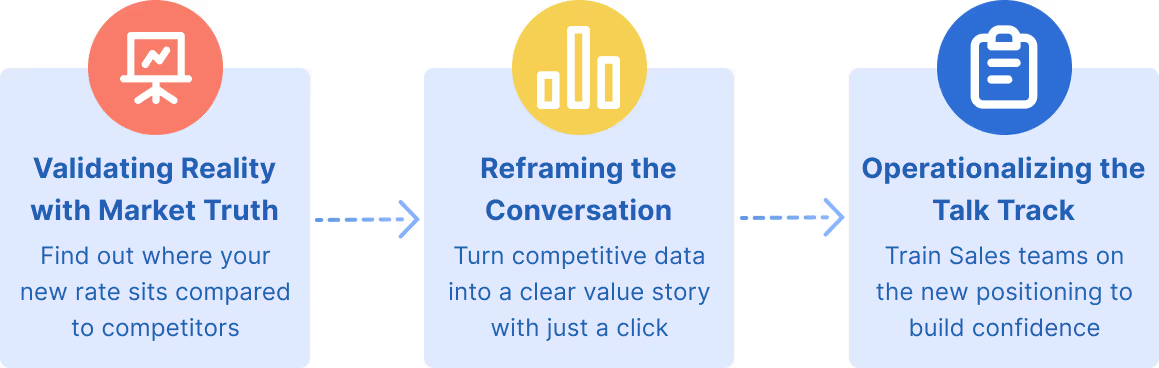
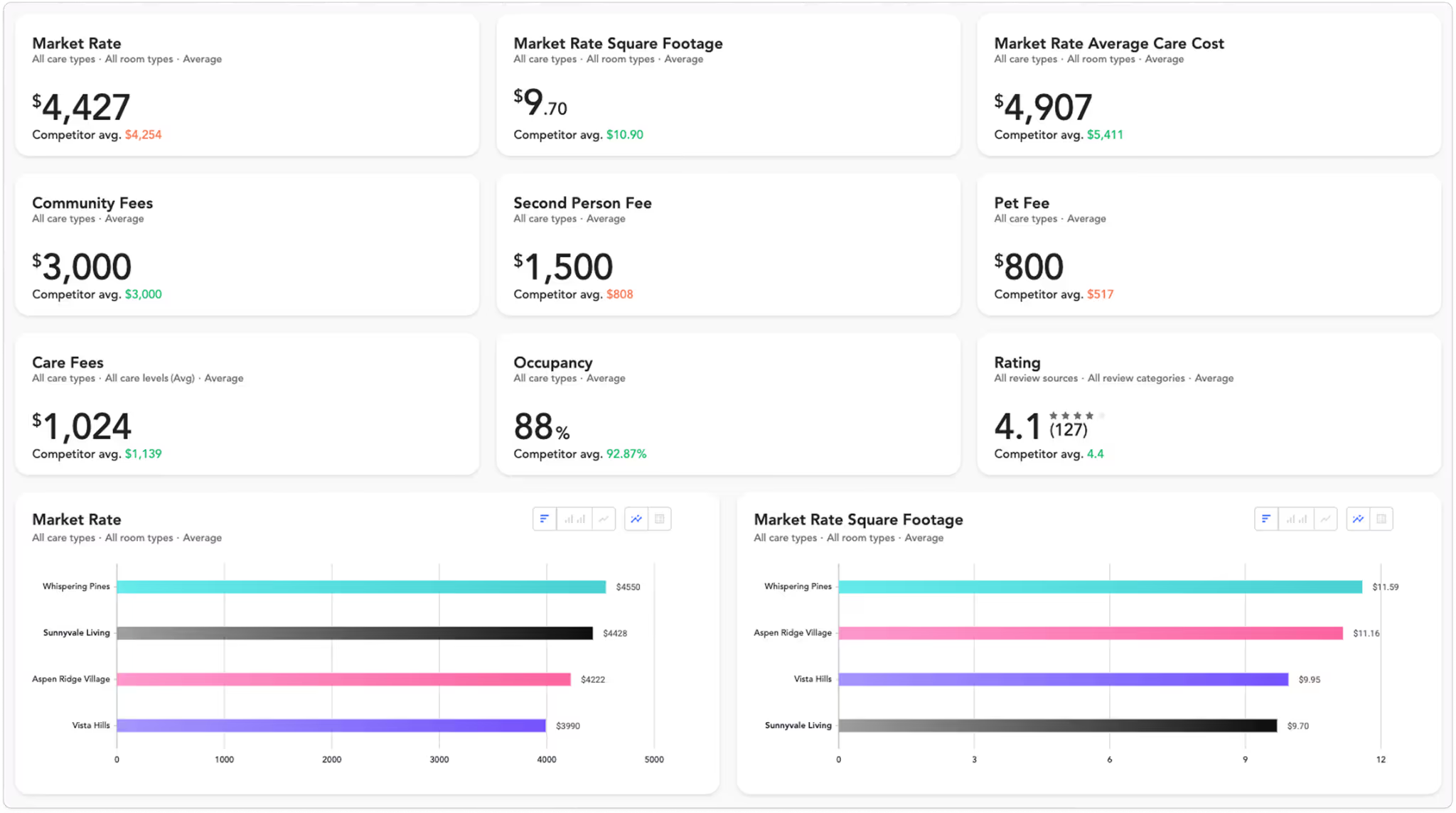
Raising rates can feel isolating, but it’s often happening across the entire industry. Before deciding how to position higher pricing, the first step is simple: confirm whether your community is actually more expensive.
The traditional approach
How Further helps
Even more importantly, when Further collects data for you, all of that data is housed within Further’s Competitive Market Intelligence (CMI) platform, complete with source documentation and verification. This ensures accurate data that everyone from Sales Directors to your CEO can trust—and confidently reference in positioning conversations.
When teams can see that competitors have raised rates as well, pricing objections become far easier to address. And if your rates are higher, there’s still no cause for concern—you simply need to understand how to position this change.
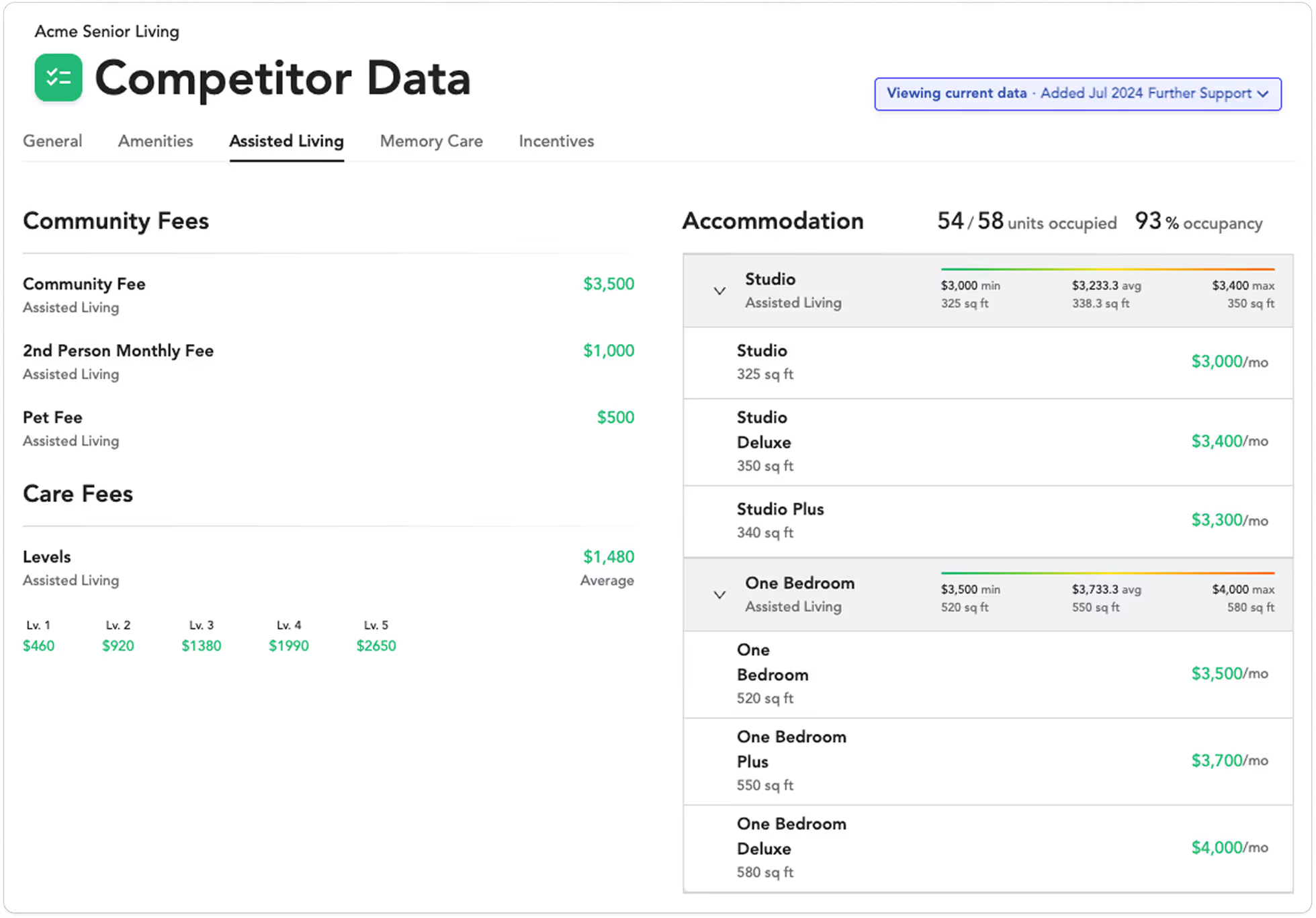
Rates alone never tell the full story.
There are many valid reasons a community may be priced above a competitor—reasons that do not deter prospects when communicated effectively. The challenge is that traditional shopping methods rarely capture the context required to explain those differences clearly.
Further’s CMI platform goes far beyond surface-level pricing. We collect and analyze comprehensive competitive data, including:
Why does this matter?
Because pricing doesn’t exist in a vacuum. When Sales teams understand everything a competitor offers—and how it compares to their own community—they gain the clarity needed to confidently articulate value.
For example, a higher studio rate becomes easier to justify when teams can point to newer finishes, better furnishings, superior views, more square footage, or a stronger lifestyle offering—supported by real evidence, not assumptions.
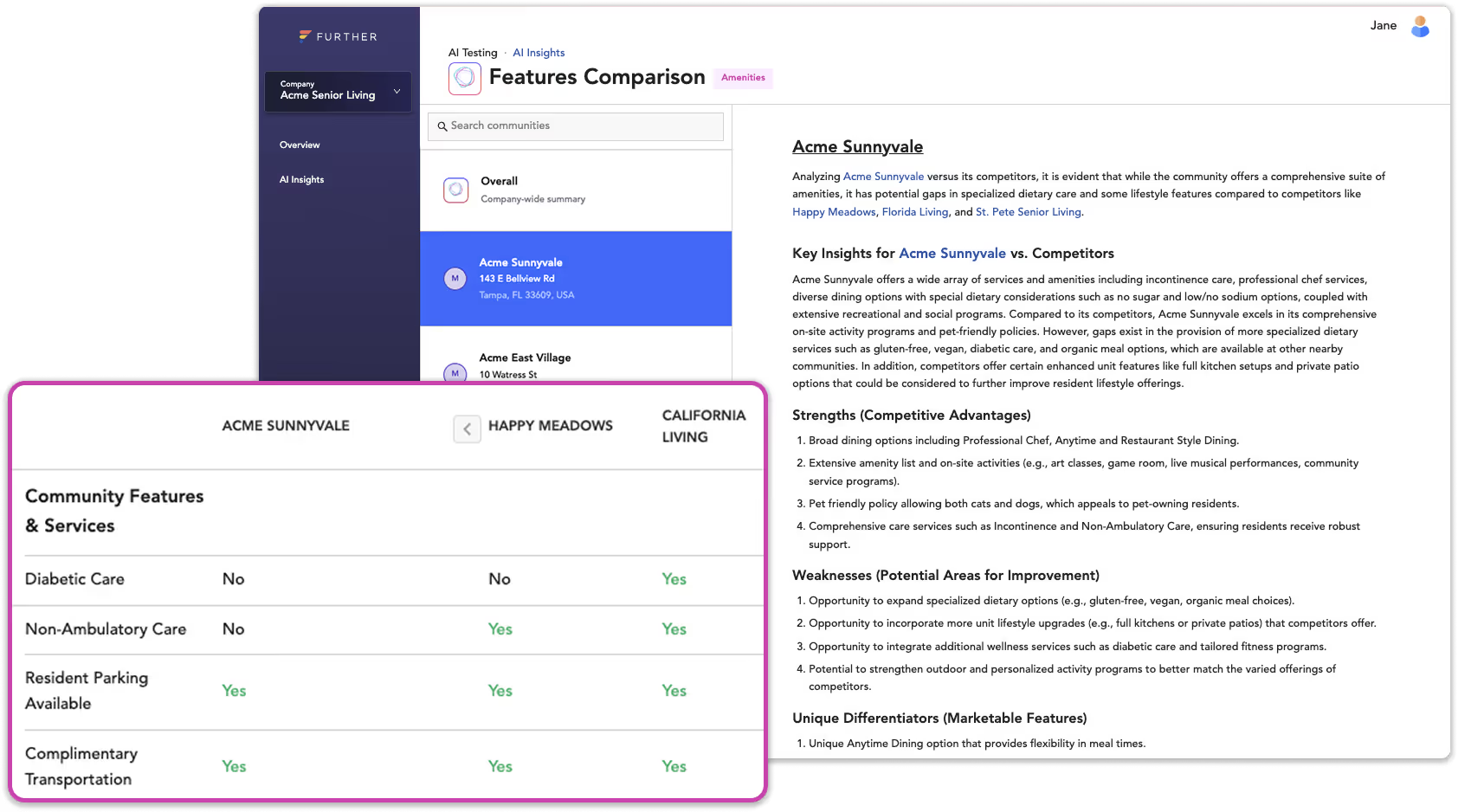
Most Sales and Marketing teams rely on CMA spreadsheets to track competitive pricing. And most teams struggle with them.
Common issues include:
More critically, spreadsheets require hours of manual work to extract meaning—if meaning can be found at all.
Further’s CMI platform modernizes the CMA entirely.
Instead of static spreadsheets, teams gain:
The result is a Sales team that understands the data behind pricing decisions and feels confident standing behind them.
Data alone doesn’t create confidence. Confidence comes when insights are translated into conversations.
High-performing Sales teams:
Further’s AI training agents help Sales teams do exactly that.
Through realistic role-play and objection handling scenarios, Sales counselors can rehearse new pricing narratives, refine their messaging, and build comfort before engaging with prospects. These AI-powered training experiences help teams internalize the “why” behind pricing—so confidence shows up naturally in conversations.
The result is Sales counselors who sound informed, calm, and credible—because they are.
Being priced higher than your competitors is not a weakness. It’s a strategic position—when supported by market intelligence and the right tools.
When assumptions are replaced with data, and uncertainty is replaced with insight, pricing stops being something Sales teams defend and becomes something they confidently own.
And that’s when higher rates become easier to sell.